
How to Teach Letter Recognition to Preschoolers
Teaching your preschooler to read can be overwhelming, but it doesn’t have to be. These tips for how to teach letter recognition to preschoolers will help make reading fun for your child.

This post contains affiliate links and I may earn a small commission when you click on the links.
Like other skills our children learn, breaking letter recognition down into small steps is key.
Before our kids could run, they had to walk- and before that, they had to crawl. Their reading journey is similar. Before they can start sounding out words, they have to be able to recognize the letters of the alphabet. On their journey to reading, that first step is learning the alphabet.
In this article, we’ll go over 5 fun ways to teach letter recognition to your preschooler. After reading, you’ll be armed with simple and effective strategies to use when you’re teaching your toddler their ABCs.
What is Letter Recognition?
Letter recognition includes several skills that are important for preschoolers to know:
Letter Names
Most kids start by learning the names of the alphabet letters first. Although this is a common skill to teach young children, some young learners actually learn how to read without knowing the name of the letter they are reading.
It is much easier to teach a child to read when they know their letter names because knowing the names of the letters gives kids and parents a vocabulary to use when learning to read. Learning the letter names is a great way to start teaching letter recognition skills to young children.
Letter Sounds
It is also important that kids know the sounds that each letter makes in order to be able to read with phonemic awareness. Kids can start to learn about letter-sound correspondences when they are learning their letter names. This is an easy way to help kids develop phonics skills.
Capital and Lowercase Letters
Because books are written with both lowercase and uppercase letters, kids will need to learn that each letter has these two different variations. Kids need to learn both lower case letters and upper case letters, and it’s important for them to understand that the pairs of letters make the same sound and have the same name.
Look for alphabet books or flashcards that have both the capital letters and the lowercase letters for a particular letter together to help teach this skill.
Letter Formation
The ability to write the letters of the alphabet is a more advanced skill. Often, kids can learn to recognize the letters before their fine motor skills have developed enough to be able to write them. As your child’s ability to write grows, you can continue to work on this skill.
The First Way to Teach Recognition of Letters
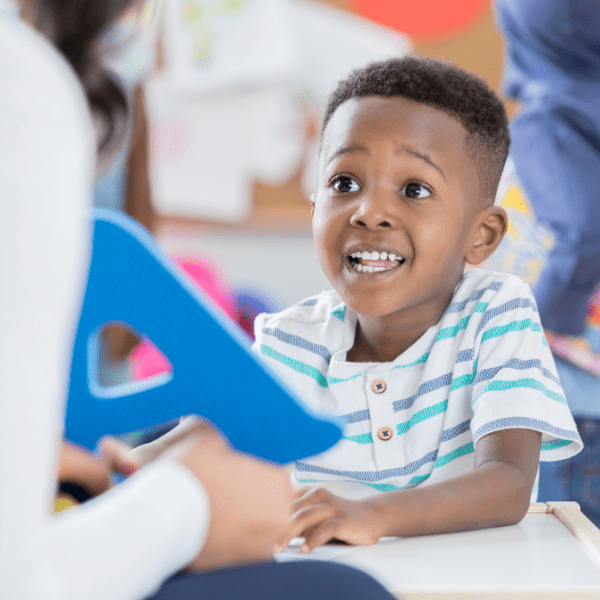
Like with walking, one of the ways our children learn is by observing us. So to start teaching letter recognition, begin with reading aloud to your preschooler. As you do so, point out some of the letters in the books. This works best with larger print books like board books, so it’s easier for them to see what you’re pointing to.
Teaching the ABC’s as Part of a Daily Routine
Some things we do every day, like brushing our teeth, washing our hands, and getting ready for bed. Building the alphabet into a routine is an easy and effective way to repeat it.
Try singing the ABCs during handwashing, using fun games like this pizza letter search activity, or putting vinyl alphabet wall clings in your child’s room and going through the letters before bed. Alphabet activities like these allow kids to explore the letters in different ways and help them to remember better over time. They also teach kids about alphabetical order, which is an important thing for older kids to understand.
Resources for Teaching Letter Recognition to Preschoolers
The best Way to Teach Alphabet Recognition
As Mr. Rogers famously said, “Play is really the work of childhood,” so the best ways to teach letter recognition are the ones that make it fun.
Letter Recognition Games
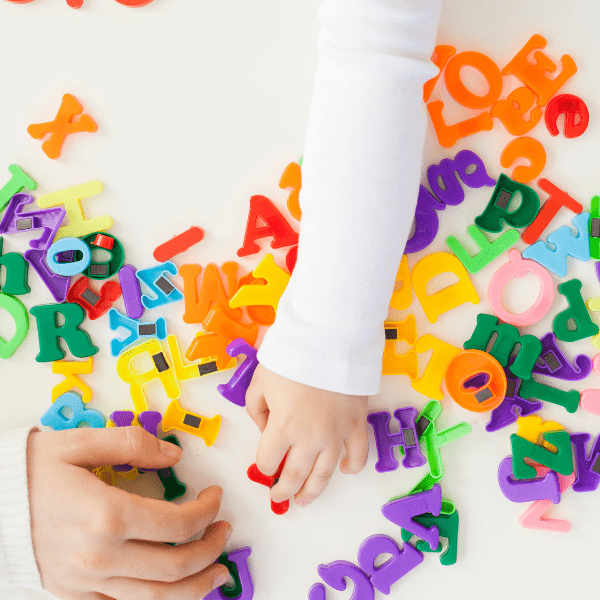
One of the simplest ways to start with letter recognition is to play a matching game. Matching letters to themselves (either the same or opposite case) is a great way to work on identification. Simple flashcards are great for this, which you can easily make or buy. You can also use interactive resources like magnetic letters, which can be great for helping kids learn the shapes of letters while making learning fun.
For a more energetic game, try “ABC jump”– a great indoor preschool activity. Simply write out letters on some construction paper with a marker and put them on the ground. Then ask your preschooler to jump to “A” (or whatever letter you call out).
For safety you may want to tape the paper to the ground, or use painter’s tape and write out the letters with it directly, skipping the construction paper and marker. This is a fun way for a kinesthetic learner to get some energy out while practicing letter identification at the same time.
If you have foam or wooden letters, or alphabet blocks, you can place them around the house for a letter scavenger hunt. Place each letter near something that starts with that letter. A is of course by the apples or avocados, C on the couch (or S on the sofa), and so on. When your preschooler discovers a letter, ask them what it is and why it was in that spot.
Letter Recognition Activities
In addition to regular flashcards, I love to use these egg carton ABCs. They’re basically a 3-D version, and fantastic for tactile learning.
You can use them in place of flashcards or blocks for any of the letter recognition games discussed above, or just let your little learner explore them. Sometimes one of the best ways to let our children learn is to give them materials and- though it can be hard!- observe instead of instructing.

How to use Letter Recognition Printables
There are 3 primary categories for letter recognition printables.
- Online resources that you print out, like these alphabet play dough mats make learning fun.
- Digital resources like ABC Mouse (which we use) allow kids to trace on a tablet.
- Of course, there are the old-school workbooks that I see on the book table every time I visit my beloved Costco.
The great thing about physical products is that you can introduce them at a very young age. As soon as a toddler can enjoy a coloring book, they can start coloring a printable or workbook page.
Digital resources like these alphabet letter puzzles are great for the car or independent quiet time (physical coloring is amazing, but it is often a direct-supervision activity).
For younger children, offer them coloring materials and gently point out what they’re coloring. “Oh, I see you chose to make that apple purple- I’ve never seen a purple apple, that’s very interesting!”
For older preschoolers, ask them about what they’re coloring and what picture is on the page, if they know what letter it starts with, and where they see it in their lives.
When to Start Teaching Sight Words to Preschoolers
Once they’ve mastered the alphabet, you can start putting letters together to form sounds and sight words.
Your child’s name is a great first sight word for them, and resources like name tracing worksheets are a great way to get started.
A great beginning tool for practicing sight words is letter blocks. Your child can identify the letters you use to build simple sight words and help you sound the words out. Blocks make it feel like play and engage their motor skills as well. Start by constructing words of things they love- cars, boats, cats, and dogs are great first sight words. You can also use the blocks to spell their name if there aren’t repeated letters.
If there are repeated letters or you want to move to longer preschool sight words, you can make DIY letter cards or use alphabet flashcard decks.
What about sight word flashcards? Once your child has mastered a few early sight words, these pair beautifully with the blocks. Put out a flashcard on the table or floor and have them put their blocks together to spell out what they see on the card.
These great ideas and fun ways to practice sight words will make teaching reading skills so much fun.
Congrats on learning something new today, now it’s their turn!
Woohoo! You’ve just reviewed the ABCs of how to teach letter recognition to preschoolers! Being here and open to learning a new idea or method about how to teach your child is exactly why you’re such a great example for them to learn from.
Thank you to Anne Aslanides from The Default Cook for writing this guest post!

Anne is a stay at home mom of two young children who started The Default Cook to combat overwhelm in motherhood by sharing easy, family friendly recipes. She believes that moms deserve more than just getting through the day, and that by spending less time in the kitchen they can spend more time enjoying their families- and even have some for themselves too.




Great article, thanks Anne and Sarah! Letter recognition is one of the first stepping stones to successfully learning how to read. These fun activities will make it a lot easier.
Thanks so much, Estie! This is definitely an important skill that makes learning to read so much easier for preschoolers!
Awesome resource, Thank you, Anne for sharing so many great ideas to share with preschoolers.
I’m so glad this was helpful! Thanks for stopping by, Christine!