Maestro Mastery Game Review
Over the past few weeks, my kids have been enjoying learning about music composers and music history with Maestro Mastery – Explore the Composers from Byron’s Games. My family has loved including this game as a part of our homeschool. In this Maestro Mastery game review, I’ll share what we love about the game, and how we have used it in homeschooling.
I received a copy of Maestro Mastery- Explore the Composers in exchange for my honest review, but all the opinions in this post are my own. This post may contain affiliate links and I may earn a small commission for purchases made through those links.
What is Maestro Mastery?
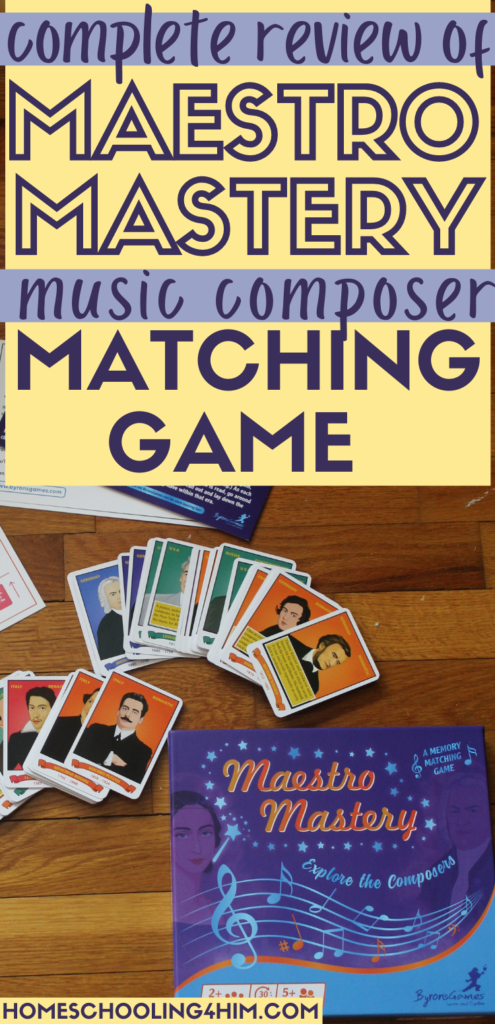
Maestro Mastery is a memory matching game that allows kids to learn about 52 different classical music composers and their music. The game includes a set of matching cards for each composer, along with suggestions for how to play the game, a chart of musical eras, and a bonus poster of all the composers. The game also comes with a companion website where kids can listen to a song written by each of the composers.
Maestro Mastery is designed to be played with at least 2 players but could be played by a large family as well. The suggested age for this game is 5 and up. Although the box says this game will take 30 minutes, we discovered during our Maestro Mastery game review that the amount of time the game will take depends on how many composer cards you choose to use when playing.

How to Play the Game
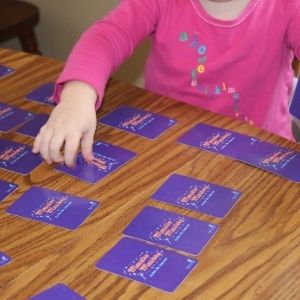
One of the things that we liked best during our Maestro Mastery game review was how easy it was to play the game. Maestro Mastery is played just like a game of memory or concentration. Players shuffle the cards and organize them face down on the table. Then, kids take turns flipping over 2 cards at a time. If the 2 cards match, they get to keep the cards. The winner is the player who can make the most matches.
In the directions, the game also recommends that the players who make the most matches from any of the eras of music history will be winners as well. I love that this game allows for more than one child to win. This is a great way to limit frustration and disappointment!
The fact that this game is so easy to play was a big plus for our family. We didn’t spend a lot of time trying to understand the rules, and my kids didn’t need to get impatient waiting to be able to play while we figured the game out. Because the rules were clear to everybody at the beginning, there was no fighting over what the rules were- another big win for Maestro Mastery!
Optional Listening Resources
Our favorite part of our Maestro Mastery game review was definitely the optional listening resources provided by Byron’s games. The game includes a website where kids can listen to a song from each composer. My kids loved listening to these songs! We listened to a section of the song after each time we made a match. You could also use these songs independently after the game is completed.
Extra Challenge Options
To make this game even more versatile, extra challenge options are included. One suggested option is to play one of the included songs and ask kids to identify what era of music it comes from. Kids can also listen to a song and try to guess which composer wrote it. To make this option easier, parents can lay out several composer cards for kids to choose from when they are guessing.

Skills Kids Learn from Playing the Maestro Mastery Game
Maestro Mastery – Explore the Composers is a fantastic learning game that teaches kids a variety of skills as they play. Here are a few benefits kids will get from playing the game:
Music Education
- Music history and appreciation: This game is a fun way for kids to get an overview of music history including eras of music as well as famous composers and their songs.
- Biographies of composers: One of the cards in each pair includes a short description of the composer’s life. My kids really enjoyed reading these cards and learning the facts about each composer. We read these throughout the game as we made matches. Over time my kids started to remember some of the information from the cards!
- Eras of music: Each card mentions what era of music history the composer was from. The cards are also color-coded by the 6 main eras of music history (Medieval, Renaissance, Baroque, Classical, Romantic, and Contemporary). This made it easy for my kids to see what era the composers were from.
- Music listening: The optional listening resources allow kids to actually listen to the music from the composers they are learning about. This is one of the most valuable parts of the game, in my opinion. The composers really came alive for my kids when they started to hear the songs they had written. My kids loved the variety of music that was included and enjoyed comparing and contrasting the songs they were hearing.
Learning and Cognitive Skills
- Memory: To be able to play this game successfully, kids will need to remember the locations of composer cards. Playing the game helps kids practice and build their working memory skills.
- Focus and Concentration: Kids need to pay attention to where each card is located so they can remember where to look to find a match. This game is a great resource for building concentration because it comes with a lot of cards to match. Families can start by playing with part of the deck and add cards as their kids’ ability to focus grows.
- Matching: The basic premise of this game is matching the composer cards. Kids can also match composers to their songs in the extra challenge activities. This is a great way for kids to develop comparison skills.
- Vocabulary: Reading the descriptions on the composer cards can help kids to build their vocabulary. I love that the descriptions aren’t simplified or watered down. We had lots of great discussions about new vocabulary words as we completed our Maestro Mastery game review.

Pros of the Game
Here are ten reasons that our family loved playing Maestro Mastery during our Maestro Mastery game review!
1. Maestro Mastery is easy to learn.
The instructions for this game were very simple and easy to understand. We are able to get started with just a quick glance at the directions. Although the game provides options for extra challenges, the basic game was very simple to figure out.
2. The game is easy and quick to play.
Setting up Maestro Mastery is as easy as shuffling the cards and organizing them on the table facedown. The game only takes a few minutes to play. We found that we could adapt the game to fit the time we had available by adding or removing composers from the deck of cards. We have some games that we never play because they are difficult to set up or take a long time to play. Maestro Mastery is not one of those.
3. Maestro Mastery is fun.
My kids really enjoyed playing this game. They especially loved listening to the songs when they made a match.
4. My kids wanted to play the game again and again.
In our house, we know that a game is a hit when my kids ask to play it again. This was definitely the case during our Maestro Mastery game review! My kids asked to play the game over and over!
5. The game is adaptable for different ages.
During our Maestro Mastery game review, we discovered several ways to adapt this game to accommodate different ages of players.
- Change the Number of Cards: This game comes with 2 decks of composer cards, for a total of 104 cards. We found that for my younger kids, it worked well to leave out some of the cards. This made the game easier for them.
- Play Open-Handed: To keep my toddler engaged, we tried a version where we flipped the cards over, and then kept them facing up. She was able to flip a card over and find its match from the other cards she could see. This made the game fun for her and allowed us to play with our whole family!
- Add the Extra Challenge Activities: The directions provide several ideas for making the game more challenging by asking kids to identify songs they hear. This is a great way to engage older kids who are looking for more of a challenge.
6. The whole family can play together.
Because this game is so simple, it is easy to adapt the rules to accommodate kids of all ages. The game can also be played with a family of any size. I love how flexible it is!
7. My kids learned a lot from our Maestro Mastery game review.
This game is designed to incorporate music education in several ways. We read the composer’s facts out loud each time we made a match. This helped my kids learn about the composers. We also listened to the songs when we made a match. This helped my kids start to be able to identify music from different composers and eras. They were also able to compare and contrast the songs. Maestro Mastery is a great fit for families who want to teach their kids about music with gameschooling.
8. The game incorporates listening.
My favorite part of this game is that it was so much more than just memorizing facts about composers. It gave my kids a chance to actually listen to the music as well. This added a whole additional dimension to the game that made it so much more fun for my kids. I know they learned and remembered more when they could listen to the music from each composer as we played the game.
9. Maestro Mastery comes with bonus resources.
Inside our game box, we found a large poster that included pictures of each composer. We also got a helpful reference card that listed and described the eras of classical music history. My kids enjoyed these extra resources and I know these will be helpful in our homeschool in the future.
10. The game gives opportunities for studying other subjects.
The great thing about Maestro Mastery is that it doesn’t just teach kids about music. Each composer card lists the country that the composer came from. This could become an opportunity to study geography and find all the countries on a map. The composer cards also list the dates that each composer was alive. This makes it easy to tie Maestro Mastery into an existing history curriculum.

Cons of Maestro Mastery
Although we loved this game very much, there were a few challenges that we had during our review.
1. Using the Optional Listening Resources in our Maestry Mastery Game Review
We absolutely loved the optional listening resources and found that they were our favorite part of the game. However, the listening resources are linked to YouTube videos of the songs. This meant that before watching each video, we had to listen to at least a few seconds of an ad.
Some of the videos were fascinating. We especially loved Leonard Bernstein’s video because we could watch him conduct the orchestra! But, a couple of the video links were broken. Also, at least one video included nudity in the context of era-specific paintings. This is a great reminder to always preview videos before showing them to your kids!
2. Organizing the Cards
When Maestro Mastery arrived at our house, the cards were divided up into two decks. Each deck included a mixture of composers from all eras of music. Although the 2 matching cards for each composer were in the same deck, they were not together.
Then, my son dropped the box on the floor.
After a long time spent trying to match up the cards again, it would be nice if the cards were numbered in some way that would make putting them in order easier. I did appreciate that the cards were color-coded by era, but it was still hard to put everything back together once they got mixed up.
Our Experience During our Maestro Mastery Game Review
All in all, my family loved Maestro Mastery – Explore the Composers. My kids enjoyed playing the game, and we appreciated that the game is simple and flexible enough to accommodate any family playing together. The educational content of the game was fantastic as well. This game is a fun and easy way to incorporate music into homeschooling!
You can read more reviews of Maestro Mastery on the Homeschool Review Crew Blog!

Related Post: Best Educational Toys Gift Guide
Related Post: The Complete Gameschooling Guide