
The Best Pumpkin Activities for First Grade
Pumpkins are a favorite fall theme for kids and adults alike. These pumpkin activities for first grade will help you and your child celebrate the season, learn more about pumpkin life cycles, and have fun all at the same time. Before you visit the pumpkin patch this year, read on to discover these favorite pumpkin activities that are perfect for first graders.

I only recommend products that I use and that we love. This post may contain affiliate links and I may earn a small commission for purchases made through those links.
Pumpkin Carving
There are many pumpkin carving ideas for first graders that you can try. You can carve their name into the pumpkin, have them create a pumpkin face and features, or even go as far as carving a pumpkin to look like their favorite animal! You can also try using pumpkin carving stencils to help you create the perfect design.
When your child is designing their pumpkin’s face, this is a great time to talk about different emotions. You can ask your first grader what pumpkin emotions they are creating. Then, ask them what facial features give clues about the emotions. Kids might enjoy looking in a mirror and trying to create facial expressions that go along with different emotions. This is an excellent way to practice social-emotional learning.
Although a first grader is probably too young to carve their own pumpkin, they can draw the face on their pumpkin with a washable marker. These markers will wash off a pumpkin easily with a baby wipe or wet paper towel.
While carving your pumpkin is the perfect time to review safety rules about knives and sharp objects as well.
Pumpkin Painting
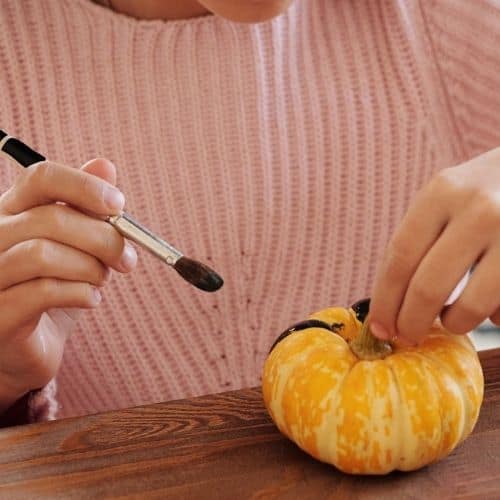
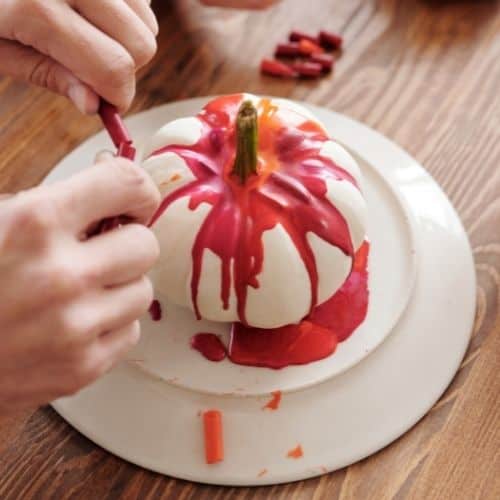
Another pumpkin craft idea is painting pumpkins with a first grader! You can create the pumpkin design yourself, or let them free paint their pumpkin however they would like to. Pumpkin painting is a perfect activity for first grade because it is safer for younger children.
Another benefit of painting your pumpkin instead of carving it is that the pumpkin will last much longer on your porch.
Acrylic paint works best for painting bold colors on your pumpkin with just one coat, so it’s a must for your homeschool supply list. Make sure that your child is wearing old clothes and an apron or paint smock before working. Although acrylic paint is water-based, it will stain clothes and other surfaces.
Pumpkin painting is a great time to teach your child how to use different types of brushes and even show them some fun pumpkin painting techniques. One fun ideas is the pumpkin dot technique. This is when you use a paintbrush or a sponge to paint dots all over the pumpkin to create an abstract design. It is up to your child how many dots to paint and where they want to place them.
Pumpkin Music Making
Another pumpkin craft idea that is perfect for first graders is pumpkin music-making. Rather than carving a pumpkin, you can turn it into a musical instrument instead!
First clean out the inside of a small pumpkin or gourd and allow it to dry completely overnight. Then, place some rice or beans in the pumpkin and seal the hole completely.
In India, the Tanpura is a stringed musical instrument made out of a pumpkin or gourd. To make a Tanpura with your child, simply take a pumpkin and cut it in half. Then, clean the pumpkin out so that there are no pumpkin strings left inside. Your pumpkin Tanpura is now ready to be strung like a guitar. You can use rubber bands or try different materials such as jute or nylon thread and tin or steel wire. Once you have your strings set up, place the pumpkin Tanpura on top of a table and enjoy playing the different sounds!
Pumpkin Songs and Rhymes
Try these fun pumpkin themed tunes with your child.
“I’m a Little Pumpkin” is a fun song to sing with your child about all the different kinds of pumpkins that exist in the world. It is sung to the tune of “I’m a Little Teapot.”
I’m a little pumpkin, orange and round (make arms into a circle like a pumpkin)
Here is my stem (put hand on head in a fist)
There is the ground (point to the ground)
When I get all cut up, don’t you shout (make scissors with fingers)
Just open me up and scoop me out! (pretend to scoop pulp)
Five Little Pumpkins is a fun rhyme and finger play. You can use this to practice counting and ordinal numbers.
Five little pumpkins sitting on a gate. (hold up 5 fingers)
The first one said, “Oh, my it’s getting late” (hold up thumb)
The second one said, “There are witches in the air.” (hold up index finger)
The third one said, “But we don’t care.” (hold up middle finger)
The fourth one said, “Let’s run, let’s run!” (hold up ring finger)
The fifth one said, “Isn’t Halloween fun?” (hold up pinky finger)
Then Woo went the wind (blow on fingers)
And out went the lights. (clap hands)
And five little pumpkins rolled out of sight. (roll arms)
Pumpkin Art
Pumpkins can be a great inspiration for fun crafts to do with your child. A unique and cute pumpkin craft for kids is to try cutting the shape of a pumpkin out of orange construction paper. Then, your child can cut shapes out of black construction paper to turn the pumpkin into a Jack-o-lantern. Hang these pumpkins in a window to decorate your home for fall, or use them to decorate a DIY Halloween escape room.
Another fun Halloween art project is using the seeds from a carved pumpkin to make a mosaic. First, wash the seeds and allow them to dry completely overnight. Then, glue pumpkin seeds onto the a sturdy piece of paper. For color, you can let your child paint over top of the pumpkin mosaic. When they are done, seal it in with another layer of glue to keep it from crumbling, and enjoy their pumpkin art!
Your child might also enjoy creating a pumpkin salt painting or creating a pumpkin with spooky Halloween playdough. Then, try some other Halloween projects like this skeleton craft.
Pumpkin Books
This is the perfect time of year to read some pumpkin books with your first grader. Here are some great pumpkin stories that are perfect for young children:
You can also check out this list of fall read aloud books for homeschoolers for even more recommendations for your library.
Pumpkin Literacy Activities
You can create a fall literacy center in your home by collecting several great books about pumpkins and leaving them out for your child to enjoy independently.
You can also use pumpkins to practice sight words. Cut some little pumpkins out of orange construction paper and write one of your child’s sight words on each shape. You can put the pumpkins in a pocket chart or on bulletin boards to help you remember to look for the words as you read books together this fall.
Your child may enjoy taking some time to learn some pumpkin trivia. Find a book of pumpkin facts or have your child create their own pumpkin fact book as they learn more about pumpkins.
Pumpkin Writing Activities
Pumpkins are a great inspiration for creative writing activities, and writing prompts can be easy ways to incorporate some fun practice into your fall pumpkin unit. Here are some ideas.
One fun activity is to brainstorm a list of adjectives you can use to describe a pumpkin. This is a great introduction to the concept of an adjective. Then, you can draw a pumpkin on construction paper while your child describes it with the adjectives that they listed.
Your kids might also enjoy writing a report about pumpkins and how they grow. You can print pumpkin report worksheets and then have your child fill them in to write a pumpkin report with information they found in books or on the computer. Printables like this Halloween word search are also a lot of fun during this season.
You can also use your pumpkin to help your child learn to write step-by-step directions. They could write how to make a pumpkin pie or how to grow a giant pumpkin, for example.
If your child is a reluctant writer, using a writing prompt can help inspire them to think creatively. This list of fall writing prompts for kids can help.
After you’re done practicing writing, try working on fine motor skills and handwriting with these pumpkin fine motor mats!
Science with Pumpkins
Did you know that pumpkins are great for science experiments? There are lots of different things to investigate and explore when it comes to the way pumpkins grow. Here are some pumpkin science activities for first graders that will be the perfect supplement to your Halloween science curriculum this fall.
Pumpkin Seed Germination Experiment
This pumpkin science experiment shows you how pumpkin seeds germinate and sprout, which is a lot of fun for first graders.
You need several pumpkin seeds, a roll of paper towels, water, and a clear glass jar. First, fill the glass jar with as many crumpled up paper towels as you can. You want the paper towels to completely fill the jar. Then, pour water into the jar until the paper towels are soaking wet. Add more paper towels as needed to keep the jar full. Push the pumpkin seeds down into the jar between the paper towels and the sides of the jar, where they are visible through the outside.
Observe your jar daily to see what happens to the seeds. Most pumpkin seeds should germinate within 10 days. Once the seeds sprout, ask your child to write or draw what they see daily. You can label the drawings with different plant parts that you find.
Pumpkin Growing Conditions
Work with your child to plant several different pumpkin seeds, but vary the growing conditions. You can do this by planting pumpkin seeds in several different containers.
Plant one pumpkin seed in a container filled with soil and place it outside somewhere sunny where the pumpkin will receive lots of light. Then, plant another pumpkin seed in a container filled with soil and put it inside your house next to a window. Put another pumpkin seed in a container filled with soil but keep it indoors without any windows. Finally, plant another pumpkin seed in a container filled with soil, but place it somewhere really dark, like in a closet or cupboard.
Keep all pumpkin seeds moist while they are growing and watch to see what happens. What do you notice about each pumpkin’s growth? When a pumpkin is grown indoors with no windows, what happens? What happens to the pumpkin that was grown in the dark?
You can repeat this experiment but vary the amount of water each seed receives instead of the amount of light.
Parts of a Pumpkin
A pumpkin is a great fruit to use for science experiments because the inside is so easy to take out and cut up into sections, which makes it easier to see what’s going on with each part. Cut a pumpkin open so that the inside of the pumpkin is visible. Then, work with your child to find each of these parts of your pumpkin: the pumpkin stem, leaves and vines (if any), skin, pulp, fibrous strands, and seeds. After you’re finished, use the seeds (and even the pulp) to make a Halloween sensory bin!

Pumpkin Life Cycle
Pumpkins don’t just magically appear in the grocery store; they have an entire life cycle that you can explore. These pumpkin activities for first grade will help your child understand the life cycle of a pumpkin.
In the life cycle of a pumpkin, the first step is the pumpkin flower. The pumpkin flower is the female part of the pumpkin plant and it needs to be pollinated for a pumpkin to form. After the flower is pollinated, a pumpkin begins to grow. Pumpkins start out small and green, and turn orange when they are ripe.
Inside the pumpkin are seeds. When the pumpkin seeds fall to the ground or are planted in the soil, a new pumpkin plant will sprout. This plant will grow leaves, vines, and eventually new flowers that will help it reproduce and create even more pumpkins.
After you teach your child about the stages of the pumpkin life cycle, you can make some easy crafts to help them remember what they learned. One way to do this is to make picture cards out of construction paper that show each step in the life cycle of the pumpkin. Arrange the cards in order and glue them together so that they form the pumpkin life cycle.
Pumpkin Math Games
There are many ways that you can use pumpkin theme math games as a starting point to practice math skills. Using math review activities and games is a great way to keep math for first graders fun and exciting.
Pumpkin Seed Manipulatives
You can work with your child to count the total number of seeds inside their pumpkin as they are carving it. Then, you can wash and dry the seeds to use as a math manipulative. Pumpkin seeds make great math manipulatives because they are easy to count. You can even practice place value with pumpkin seeds by painting them different colors to represent different values. You can create a math center in your home by leaving out some pumpkin seeds and pumpkin number cards for your child to count and play with independently. Kids might also like to try a spider counting activity for Halloween, and pumpkin seeds make great Bingo markers game with this Halloween bingo printable.
Addition Practice
Another pumpkin math game is pumpkin addition. Give your child a pile of pumpkin seeds that have been washed and dried. Then, have the child roll two dice and find the sum using their pumpkin seeds. You can use this activity to practice math facts or to learn about number bonds. After your child has found the sum, ask them to write a number bond to describe the fact family. This is a great addition review for kids that already know their math facts as well!
You can practice graphing by using simple recording sheets to keep track of the sum of each problem. Then, graph the sums to find out which one occurred most frequently.
Pumpkin Measurement
Kids can also practice measurement by measuring their pumpkins. Have your child use a measuring tape to measure the pumpkin from stem to blossom end. Then, they can compare their pumpkin’s measurements to the length of their foot.
They can also learn about circumference by measuring around the pumpkin at its widest point. This is a great way for first graders to learn about measurement and it helps them understand how big something is when they can see it with their own eyes.
Pumpkin Geometry
Another fun activity is to push a variety of push pins into the outside of a pumpkin. You can create a geoboard with the push pins, and your child can make geometric shapes by stretching rubber bands over the push pins.
When carving your jack o lantern, it can be a great time to learn about symmetry. Have your child draw a straight line down the pumpkin to create a vertical line of symmetry. Then, have them draw another line across the pumpkin to create a horizontal line of symmetry. Use a washable marker to draw the lines so that you can erase them with a wet paper towel or baby wipe when you’re done with the lesson. Is your child’s pumpkin face design symmetrical or asymmetrical?
Pumpkin Baking
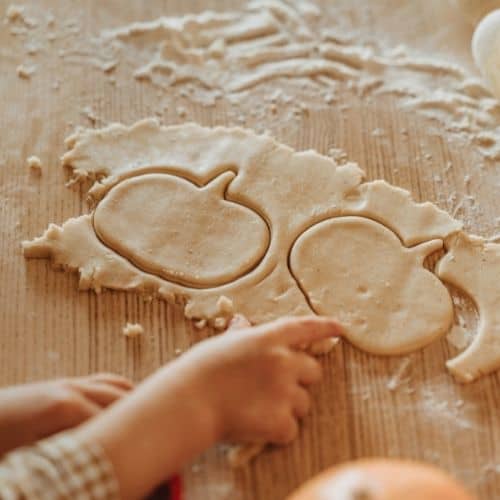
Of course, pumpkin activities for first grade wouldn’t be complete without some baking. There are all sorts of pumpkin-related recipes that can be made by kids! You could make pumpkin soup or pumpkin bread with your child, or roast pumpkin seeds. You can also make pumpkin muffins, pumpkin cheesecake, pumpkin cake, pumpkin cookies, and pumpkin pie.
Baking with your child is a great learning opportunity. Help your child learn how to read recipes, measure ingredients, and mix them together. You can even practice fractions as you measure the ingredients. Your child might enjoy creating a special recipe for your family’s thanksgiving celebration this year!
You can also talk about the order of operations when working with pumpkin recipes. This is a great way for first graders to learn how to follow sequential directions. It will help them understand that there are specific steps they need to take for their pumpkin baking to turn out right.
Which Pumpkin Activities Will You Try with Your First Grader?
Pumpkin activities for first graders are fun because pumpkins can be used in so many different ways. Whether you have kids that love pumpkin painting, pumpkin carving, science experiments, or pumpkin baking, these fun ideas will help you find something exciting to do with this popular fall time symbol.



![55 Best Educational Toys Gift Guide [For 2026]](https://homeschooling4him.com/wp-content/uploads/2020/09/Educational-Toys-768x402.png)