When Should Children Learn to Read (and why there is not a simple answer)
Parenting is challenging, and the question of “Is my child normal?” begins almost immediately. Are they rolling over, cooing, grabbing your finger? This continues with talking, walking, learning their colors. So, of course, “when should children learn to read” is one of the first things new homeschool moms ask.

This post contains affiliate links and I may earn a small commission when you click on the links.
What Does Normal Look Like when Children Learn to Read?
No one wants their child to be behind the other kids in their age or grade. Everyone wants their kids to get a head start and be able to read above grade level at an early age. I’ve learned from experience, that the charts are not to be taken as gospel, and more times than not, we need to let our child lead.
Caleb’s Story
My firstborn, Caleb, was a late talker. At three years old, he only had a handful of words. I knew he had language skills because he understood everything I said to him. People told me it was my fault he didn’t talk. I was distressed and had him tested.
The public school convinced me that he would talk if he was away from me and I enrolled him in their preschool program. This went against everything I wanted to do with him. My mama instincts were yelling at me that they were wrong. He just needed time to develop at his own pace. The new mom’s anxiety won and I enrolled him.
Did he start talking? Yes. Was it because he was away from me? I highly doubt it. He was ready to talk and did. Fast forward 11 years and I have a tall and bright son who loves science, nature, and animals. No one would know he wasn’t talking when the rest of his age group was fluent.
Developmental Milestones in Reading
This was just the first of many milestones my five kids missed over the years. I wanted to begin with this because reading is no different. There is a belief that children should be learning to read younger and younger in elementary school or even preschool and schools are pushing early literacy when it isn’t necessary.
It is important to allow your child to develop at their own pace and when they are ready for reading it will come easily to them.
I’d like to cover the following in this post:
- Signs your child is ready to learn to read
- When you should wait another year
- What educational activities should you be doing when your child isn’t ready to read
- How do you begin teaching them to read
Play is Important
I frown at many reading commercials because they often show parents boasting about how well their child can identify sounds and sight words. This is great, really it is, but why isn’t anyone boasting that their child played in the mud all morning, painted a sloppy picture of a sun, or skinned their knee trying to climb a tree? All of these childhood activities are, dare I say, more important than phonemic awareness and early literacy skills.
A child that is identifying words and letter sounds early does not guarantee they will continue to excel in reading, or that they will develop a love of reading. Studies show that most young readers that begin reading in the early years will no longer be more advanced than the majority of their peers by third grade.
When Should Children Learn to Read?
The main reason for this post is to encourage the mom who is not sure if she should teach her child to read or wait a bit. There is an annoying stigma placed on kids that “aren’t ready” and this is wrong.
There is not a hard and fast rule that says your child should be ready to read at 5.5 years of age and needs special help if they are not.
I want to encourage you to listen to your child!
The Story of My Joshua
I have one more story for you and this is what prompted me to write this post, to begin with.
I taught my first three children to read at 5 years old. They were ready. I felt as if they needed something structured to do throughout the day and they took to reading with little trouble.
Then comes Joshua. He is my outside of the box, wild child. He has an imagination that ropes us all into playing. One day we are soldiers and the next we are doctors. He is constantly “cooking” food in our play kitchen but turns foam blocks into hot dogs and burgers and dresses in both his Ninja costume and his chef apron (at the same time!). There is never a dull moment with Joshua and our lives are richer (and maybe a bit more chaotic) with him in them.
So, just like I did with the others, I sat him down at 5, created a schedule and we got to work. Only, it didn’t work. Not at all.
He became moody and restless. He couldn’t sit still, sound out words, or remember the things we had been working on all week.
It was clear that he wanted to play. “Please can I go play?” he would ask me over and over. I gave in. Let him play. I let him play for an entire year.
And I am so glad that I did. Why? Because when we tried again, just before he turned 7, it all came naturally to him. Nothing was forced. There was no whining, no struggling, no moodiness, and no reading challenges.
He still begs, “can I go play” and I say yes because he is always ready 20 minutes later to practice a few more new words, sound out a few new sounds, and write “neater than everyone else”.
Signs of Reading Readiness
So, now that we’ve established that it is ok to wait, and that raising early readers shouldn’t necessarily be the goal, what are we looking for? How do we know when we should proceed with teaching our child to read?
Learning to read is about so much more than simply identifying letters and sounds. It is remarkable what actually goes into something we adults take for granted.
Here are a few things to look for that lets you know your child is getting close to reading readiness.
Emergent Literacy
Emergent literacy (a term that describes the language development of young children which prepares them to eventually read and write) develops from birth as a child listens to and copies the language around them. The single most important thing you can do with your child is to talk to them. Chat with them about the trees outside, why water is good for you, and how to express what they are feeling. They will imitate your expressions, the cadence of your voice, and learn to retell stories in their own words. Their growing understanding of language will hint toward when they are ready to read.
An Understanding of Books
Children will begin to turn pages from right to left, point out pictures and talk about them, as well as understand that we read from left to right. They may memorize certain pages and insist on “reading” those pages themselves. Reading together is a great way to build a positive association with books and help kids develop a love of reading.
An Awareness of Letters and Symbols
Your child may not be able to name all of the letters yet, but they will understand that the letters are a symbol that represents a sound. They may try to write the letters and ask you what it says. They will also be able to distinguish the difference between a letter and a shape and eventually a letter and a number.
An Understanding of Sounds
Kids love to sing songs, repeat rhymes and jingles, and play with sounds. Sometimes those sounds are annoying, sometimes you can hear they are experimenting and will accidentally rhyme or say something that “sounds” funny. This exploring of language is a great sign, and it is a good idea to encourage it when you notice it.
Recognizing Their Name
Your child will beam with pride when they learn to read their own name. This is huge for them. Those symbols represent them. Before long they will realize that those same letters appear in other places. They will also begin trying to write it themselves. Encourage any effort even if it isn’t close.
A Desire to Read
They will want you to read to them and they will try to read by themselves (usually a favorite book that is very familiar that they have memorized).
The Ability to Retell a Story
This may be a story someone tells them or a book you read to them. They also have the ability to talk about things that have happened to them such as what they did at the park or who played what game with them. This is an important skill that good readers have because it helps them with reading comprehension when they are reading independently.
Resources to Help Your Children Learn to Read
Literacy Activities to Prepare for Reading
While your child is growing and developing in their natural environment surrounded by items to play with, adventures outside, and caregivers who enjoy talking to them, reading readiness will come naturally.
Read to Your Child
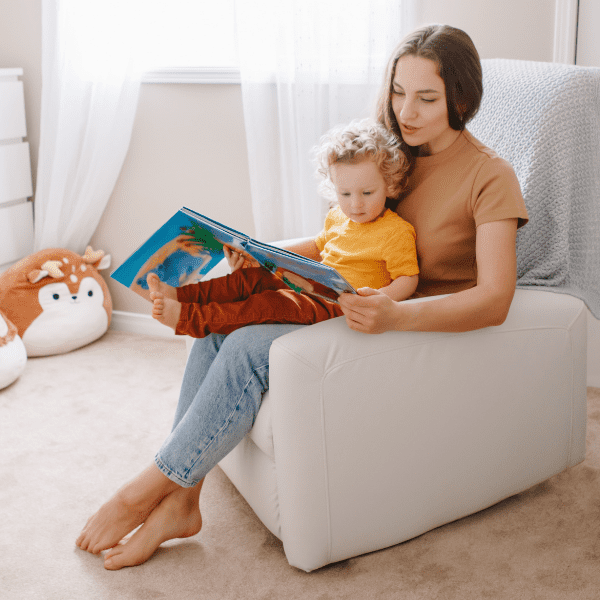
Reading to your child is the best way to prepare them for reading. Snuggling up in a chair with your child and a big stack of board books creates a link between feelings of happiness and security and books. This positive connection that is built during reading time will last them their entire lives.
Picture books will increase their vocabulary. Picture books are also a great introduction to phonics instruction. When you spend so much time reading to your child, they will begin to hear the sounds of words and how they rhyme, how they go together to form good quality sentences, and how they change them just a bit to create a different word.
Reading provides kids of different ages an opportunity to learn about other people, their immediate environment, as well as far-off places. They learn to relate to feelings, explore actions and consequences from the safety of your lap, as well as learn about the world around them. These lessons are important as a child learns to apply what they read about to their everyday life.
Related Post: Your Homeschool Reading List: The Ultimate Guide
Helping Children Learn to Read Through Play
Beginning introducing your child to letters and sounds during play is a wonderful way to feed their curiosity. Try some of the following different ways to introduce pre-reading skills to young kids:
Point out letters on blocks, puzzles, and signs.
Provide a variety of art mediums. While painting pictures, coloring with crayons, or drawing with sidewalk chalk, you can easily draw a connection to the first letter of the object or color. For example, draw a picture of a sun with a yellow piece of sidewalk chalk and draw a large S in the center. Casually explain that you are putting an s there because the word “sun” begins with s. Chances are your child will copy you or ask what letter to put into their picture.
Sing the ABCs, fun songs, and silly rhymes with them.
Make letters while in play. Line up sticks to make letters or use a stick to draw in the mud. Arrange rocks, acorns, leaves, flowers, etc. in the shape of letters.
Use bath markers to not only draw pictures during bath time but also letters and numbers. This is a great way to help kids in any stage of development make reading fun.
Shaving cream is a wonderful sensory activity. Allow them to squish it between their fingers, spread it out on the table, and use their fingers to draw shapes, letters, and numbers.
Playdough can be rolled into a variety of shapes and letters. Playing with playdough is also a great way to practice fine motor skills.
Literacy Activities to Begin Learning to Read
When your child is moving beyond the exploratory stage but not quite ready for the full sit down with a reading program and read lessons, more systematic instruction and focused and deliberate teaching can be encouraged. This is when I love to use the letter of the week concept.
I choose one letter a week and our formal reading instruction is all fun and games all focused on that letter. We read children’s books, color pictures, prepare foods, etc. that begin with that letter. Check out these posts to give you a better idea of what I mean.
Learning the Letter A: Worksheets, Books, and Activities
Fun Preschool Activities for the Letter B
During this time don’t be afraid to encourage short periods of sit-down work or quiet time. Provide younger children with plenty of puzzles, lots of books, educational toys, building materials, art supplies, sensory activities, music, and imaginative play. They will continue to learn by play.
You can begin to show them how to form letters and numbers, focus on fine motor skills such as cutting, and point out words in reading books that you read together. Letter stickers, stamps, and puzzles allow them to “play” with letters, and no doubt they will be asking you what words they make and what individual sounds different letters say. For more ideas check out 20 Educational Activities for Preschoolers.
Learning to Read Through Play
If you haven’t gathered so far how important I think free play is, let me emphasize it now. Children learn by imitation. This imitation comes naturally and therefore does the learning.
In today’s day of immediate information, learning shows and apps, and overstimulation, we can go back to the basics and find that none of them are really needed for normal brain development.
Not only does play provide the foundation for learning, but it also provides the foundation for exploring, problem-solving, and understanding their role in their world. It opens the door for imagination and creativity which leads to cognitive development (reading included!) and intellectual processing.
When Should Children Learn To Read?
In closing, let’s go back to our original question. When should children learn to read? The answer would then be, they are learning to read, long before we realize it. Allow them time to explore and learn on their own at an earlier age and then when you sit down and teach them formally it will all come together easily.
There is no hard and fast rule about when this all comes together for a child because each child is different (and we like it that way, don’t we?!). When we provide them the opportunity to play, when we read to them and talk with them, we find that we are laying the foundation for these important developmental milestones.
Lastly, when answering the question, “when should children learn to read?” we must remember to embrace our children just as they are and allow them to lead. There is no right or wrong to this question just as there is no right or wrong for when your child learns to walk or talk or tie their shoe. They are a unique individual and should not be forced to learn when they are not ready or held back if they are biting at the bit. It will become frustrating for you and them.
Enjoy the reading journey, Mama!
Thank you to Heather from Lessons from Home for writing this guest post!

Hi, I’m Heather from Lessons from Home. I’m in love with my five kids, homeschooling, and all things chocolate. At lessons from home I share my homeschooling and parenting journey along with the lessons God teaches me as I learn to follow Him wherever He leads. Healing from loss is a major part of my story as my family walks the dark path of grief after losing my beautiful 8 year old daughter.
I’d love for you to visit me at Lessons from Home or stop by my Facebook and Instagram pages!